By the clock
Tummy time by the clock, and what the floor has to do with it
Three to five minutes, two or three times a day, then fifteen to thirty minutes daily by two months. The institute’s figures, and what they ask of the surface underneath.
Minutes on the clock: what the institute recommends and how it adds up
Tummy time is defined by the National Institute of Child Health and Human Development as placing a baby on their stomach while they are awake and someone is watching them. The institute’s guidance on minutes is simple. Most babies can start a day or two after birth. At first, two or three short sessions of three to five minutes each work well. By about two months, pediatricians recommend a total of fifteen to thirty minutes of tummy time daily.
You can think of those figures as a schedule you build into the day. Short sessions at the start add up, and the fifteen to thirty minutes recommended by two months becomes routine. The table below shows common daily patterns and what they equal across a week.
| Scenario | Sessions per day | Minutes per session | Daily minutes | Weekly minutes |
|---|---|---|---|---|
| Newborn, low | 2 | 3–5 | 6–10 | 42–70 |
| Newborn, frequent | 3 | 3–5 | 9–15 | 63–105 |
| Around two months | 1–4 | 15–30 total | 15–30 | 105–210 |
The first days are a few short sessions and no more than that. You will be watching closely. Those early minutes are mostly about tolerance and familiarity. The goal at two months is a manageable daily total. Ninety minutes over a week, in pieces of three, is what the early weeks add up to. Small and steady is the whole of it.
Why sessions start short and what changes by two months
The institute’s advice to begin with two or three sessions of three to five minutes explains the logic of short starts. Newborns tire quickly. The baby’s muscles are still developing control for holding and moving the head. Short sessions reduce stress and let the baby practice small lifts and turns. The institute points out that tummy time helps strengthen the neck, shoulder and arm muscles a baby needs to sit up, crawl and eventually walk, and that it helps prevent flat spots on the back of the head. Those results are described by the institute as benefits of the practice.
You are not trying to reach a long set the first week. The baby is learning to use muscles and to tolerate the position. Sessions that last three minutes may look brief, but they are repeated. Over several days, those small efforts build the basis for a longer total by two months. The recommendation of fifteen to thirty minutes daily by that age marks the shift from a few minutes of practice to a routine.
The baby’s nervous system and stamina change noticeably during the first eight weeks. You will see longer head lifts and steadier looks. The CDC notes that holding the head up while on the tummy is a movement milestone listed for two months. The program defines a developmental milestone as something most children, 75 percent or more, can do by a given age. Watching the pattern of short to longer sessions helps you track how the baby is tolerating the position and how the sessions can safely expand.
What you do while the baby is on the tummy
Tummy time requires someone watching. The institute defines it that way. You will be present for nearly every session in the early weeks. The institute suggests a few practical steps. Spread a blanket on a clear area of the floor. Put a rolled-up towel under the baby’s arms to prop them up slightly. Try short sessions after a diaper change or a nap. Put a toy within reach and have someone the baby trusts sit in front of them.
You sit or lie on the floor. The baby looks toward your face, your voice and a nearby toy. The baby practices lifting and turning the head. Gentle encouragement matters. A mirror, a soft rattle and your quiet talking all help hold attention. The rolled towel under the arms offers a small mechanical advantage so the baby can lift the chest without needing full arm strength. Timing sessions after a calm activity makes them less likely to startle the baby.
The person watching also watches for fussing and fatigue. The institute’s short-session recommendation fits how quickly a newborn shows signs of tiredness. You break sessions into manageable pieces. The baby’s responses guide you. Over days and weeks, longer totals become possible. The institute’s suggestions give a simple checklist for how to manage each session and who should be present.
The floor matters: warmth, wipeability and firmness
The surface you choose affects how a session goes. The institute suggests spreading a blanket on a clear area of the floor. That basic instruction points to three practical requirements. The surface should feel warm rather than cold. It should wipe clean rather than absorb spills. It should be firm enough for the baby to push against the floor.
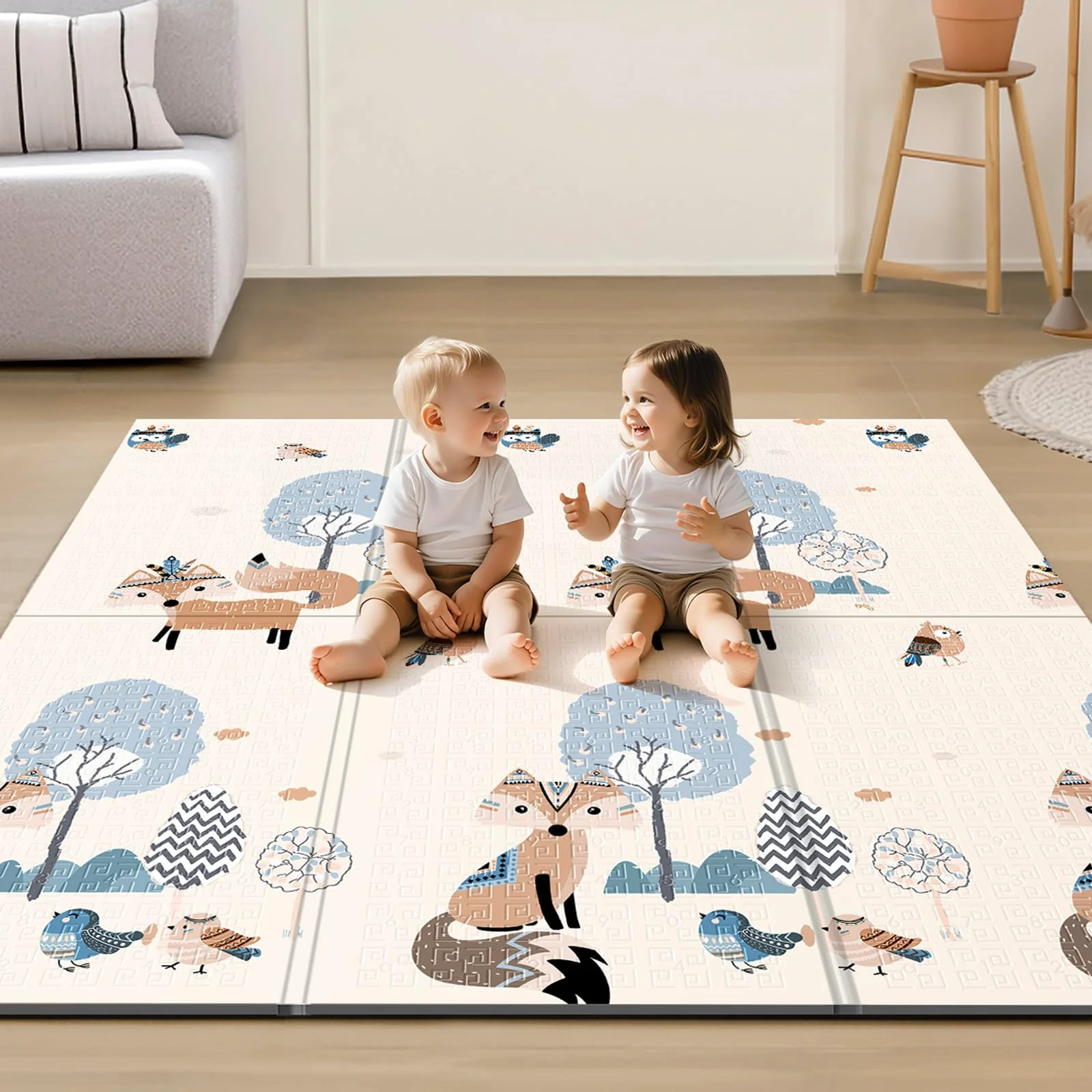
Our mats are 0.4 inches of XPE closed-cell foam, printed on both faces, with a waterproof top skin that wipes clean with a damp cloth. The foam is a poor conductor of heat, so a mat feels warmer underfoot than the tile it lies on. A slightly warmer surface helps the baby tolerate short sessions. The top skin’s wipeability meets the institute’s suggestion for a clean, clear area and makes quick cleanups simple when needed.
You will also notice that the mat folds along printed creases to about a third of its open size. That folding makes it easier to clear a little floor space when you want a tidy spot for a session. The floor’s firmness matters because the baby needs a stable plane to push against while lifting. A floor is a setting for practice and nothing more than that. What the institute asks for is a clear, warm, firm place to put a blanket down, and a mat is one way to have one.
How much floor half an hour a day actually needs
People often imagine lots of open space is necessary for tummy time. The math from the floor measurements shows otherwise. The mats come in three footprints. The smallest is 59 by 59 inches, which equals 24.2 square feet. The medium is 71 by 59 inches, or 29.1 square feet. The largest is 79 by 71 inches, which equals 38.9 square feet. Those are the open sizes you place on the floor for sessions.
You do not need the whole mat for a short session. A blanket on a clear area of the floor is what the institute suggests, and a mat is a clear area that is already there. A single 24.2 square foot mat provides ample clear floor for the short practices recommended in the early weeks. The recommended daily totals of fifteen to thirty minutes by two months can be achieved on any of the three footprints. The mat folds to about a third of its open size for storage. That folding means the floor area you dedicate to tummy time takes up only a small footprint when not in use.
The baby occupies a modest space during each session. You place the rolled towel, toy and your own seat within reach. The quantity of floor actually needed for a routine of weekly minutes is smaller than many expect. The sizes above make it clear that even the smallest footprint handles daily totals without requiring a large, uninterrupted expanse of uncovered floor.
When that floor graduates from tummy time to crawling territory
Tummy time is practice for what comes after it. The institute links it to the muscles a baby uses to sit, crawl and walk. The Centers for Disease Control and Prevention lists holding the head up while on the tummy as a movement milestone for two months. The CDC defines a developmental milestone as something most children, 75 percent or more, can do by a given age. The program also notes that its materials are not a substitute for standardized, validated developmental screening.
You will notice the floor’s function changing as the baby grows. Short supervised sessions become longer practice and then transition into reaching, rolling and, eventually, pushing into crawls. The sizes and surfaces described earlier remain useful. A waterproof, wipeable top skin continues to simplify cleanup when snacks or spilled water appear. The foam’s warmth underfoot stays an advantage on colder surfaces. The larger footprints provide a broader circuit for early crawls and for toys placed at a short distance.
The mat’s folding into roughly a third of its open size helps you adapt living space as the baby’s needs change. The floor that held quick, supervised practices can become a trail for first movements. You will rearrange, add toys and change the sessions, and the same clear, wipeable surface continues to support each step. The floor is where the minutes happen, and those minutes are the steady part of a routine that keeps growing.